
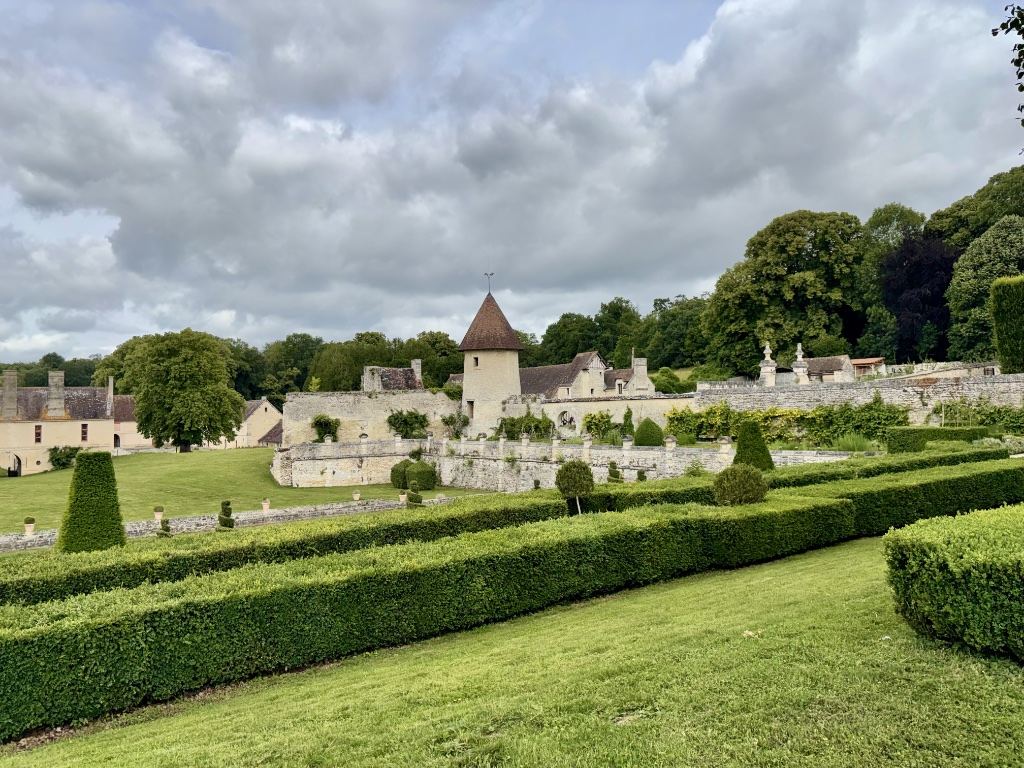
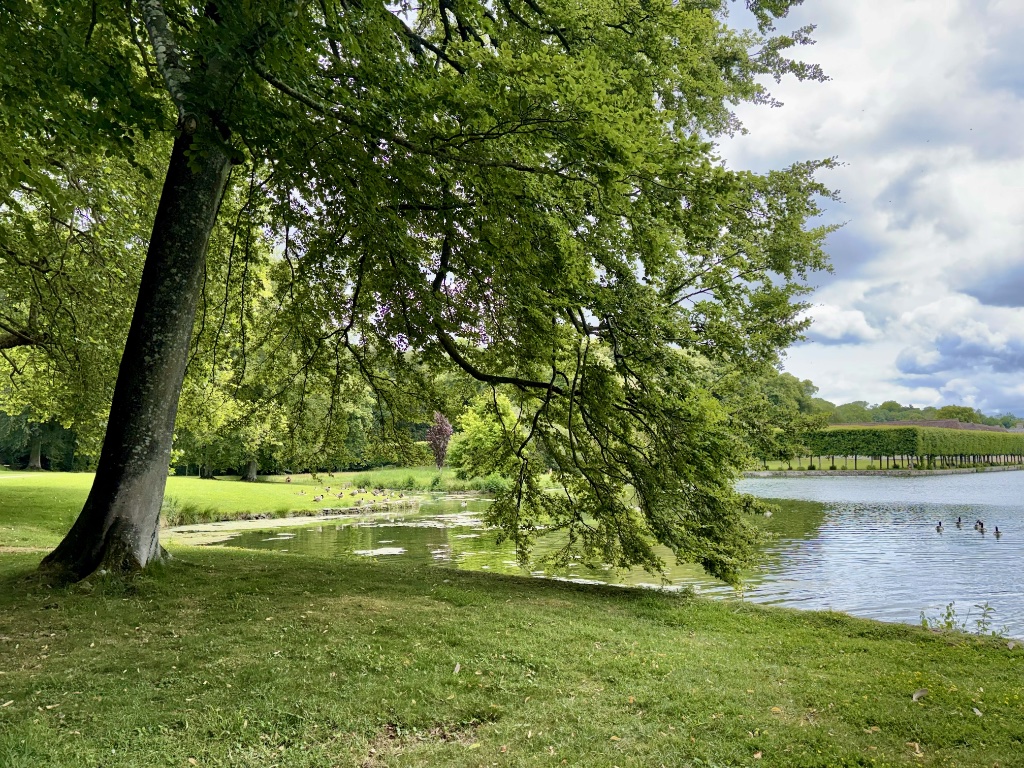
Layers of history unfold for visitors to the Domaine de Villarceaux, a historic monument in the Parc Naturel Régional du Vexin Français. On this sprawling estate, we are far from Versailles, with its strict symmetry and formal gardens. Nature dominates at Villarceaux, but centuries of human intervention add numerous interesting features, including medieval ruins, vestiges of a 16th-century manor house and an 18th-century château. The 173-acre park boasts Renaissance gardens, many spring-fed water features and a multitude of elegant tilleuls (lime trees), making it a perfect day-trip destination for both nature lovers and history buffs.
Originally an agricultural estate with a manor house, several farms, a mill, fishponds, vineyards, and gardens, the estate still boasts a terraced kitchen garden, one of the first things visitors see after they pass through the gates after wending their way through a maze of trimmed hedges from the parking lot. Today, local varieties are grown pesticide-free using traditional techniques. Artichokes were flourishing there during my visit, while nearby beehives were busily producing honey.
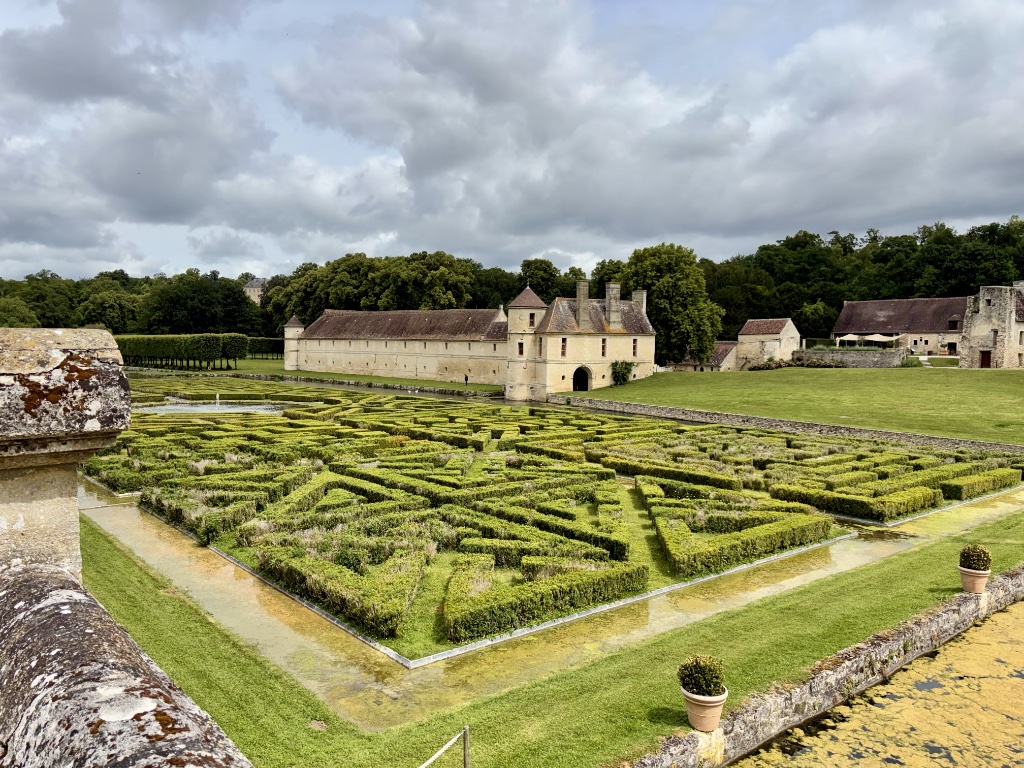
The garden whets the appetite for a stroll around the property. All that remains of the original château, dating from the 16th century, is a small, four-room structure inhabited once upon a time by the free-thinking, free-spirited courtesan and woman of letters Ninon de Lenclos (1620-1705), one of whose many lovers was the lord of the manor, Louis de Mornay, Marquis de Villarceaux (others included Charles de Sévigné, the son of renowned letter writer Madame de Sévigné).
Her four-year affair with the marquis in the mid-17th century led to the birth of a son, who was later legitimized by his father and given the name Louis François de Mornay de la Boissière. The marquis fell ill when she left him and went back to Paris in 1655. To console him, she is said to have sheared off her long hair and sent it to him, kicking off a new Parisian mode for short hair.
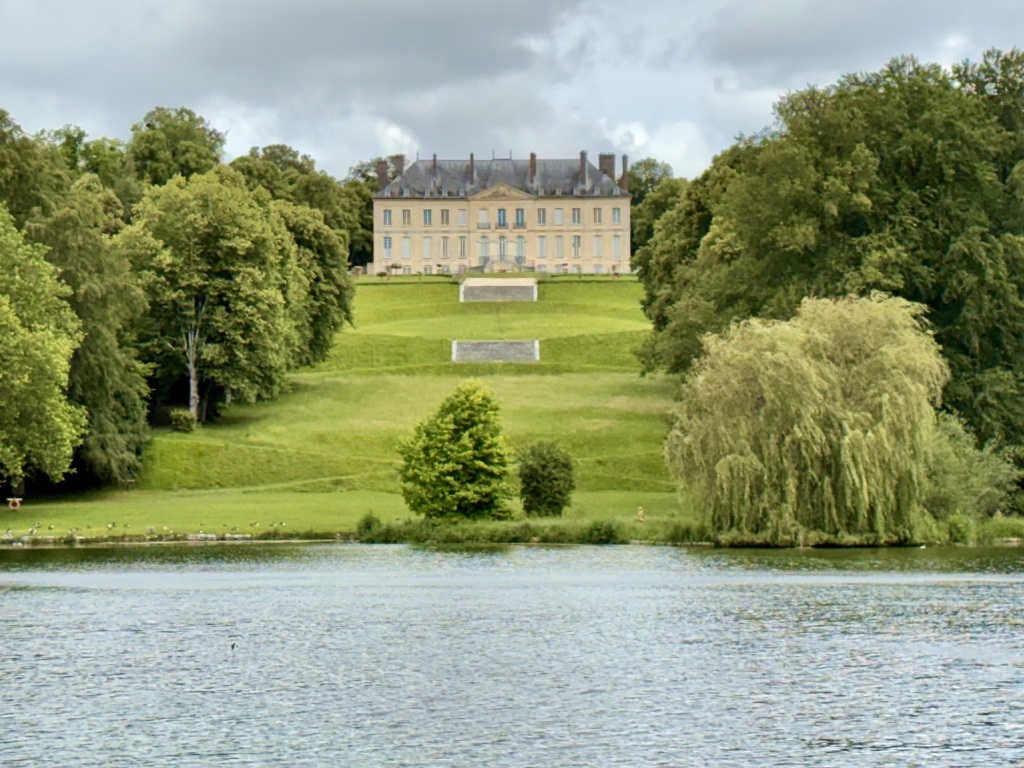
In the 18th century, the “new” manor house, the Château du Haut, was built by Charles-Jean-Baptiste du Tillet, marquis de la Bussière, the great-nephew of the Marquis de Villarceaux, from the stones of the old one. It stands intact on a hilltop with a lovely view of the valley below and still has its original furnishings, a rarity among French châteaux, probably because the Tillet couple were spared from the usual desecration of the property of aristocrats during the French Revolution. They were known for their kindness to the locals; for example, they gave pensions to employees no longer able to work because of illness or age, highly unusual for the time.
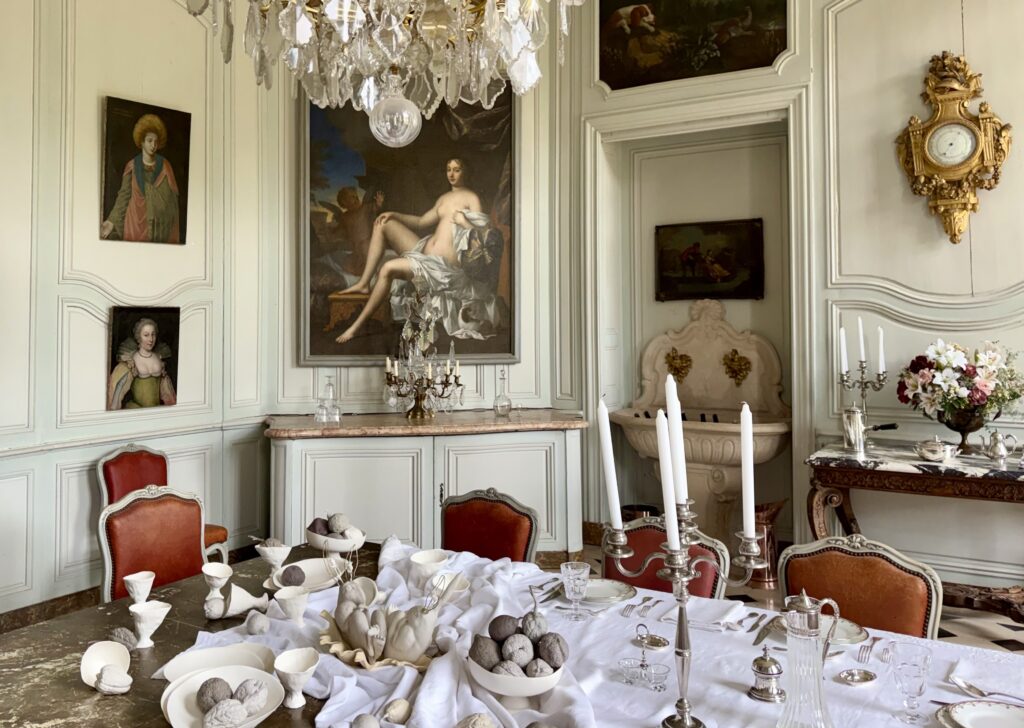
One of the paintings decorating the château’s dining room is another rarity: it depicts a naked lady sitting in a voluptuous pose, representing Diane after her bath. It was painted by none other than the (not untalented) Marquis de Mornay and depicts his post-Ninon de Lenclos lover, Françoise d’Aubigné, a.k.a. Françoise Scarron, a.k.a. Madame de Maintenon, a mistress of Louis XIV and eventually his morganatic wife, who ended her life as a religious woman who had convinced the king to follow her pious example.
After the Revolution, the amorous antics of the aristocratic inhabitants of the estate presumably came to an end. In the 19th century, new owners used the property as a second home and built cottages, an orangery and a sawmill. Many vestiges of the distant past were left to fall into disrepair until 1989, when the Île-de-France region took over the estate’s restoration and management and opened it to the public.
A highly recommended visit to Villarceaux is akin to taking a walk through nearly half a millennium of French history while enjoying a bit of forest-bathing in its sumptuous natural setting.
See our list of Current & Upcoming Exhibitions to find out what’s happening in the Paris art world.
Favorite